Salvation Army Builds Strong Relationships with Indigenous Communities
Every passing year, the partnership between The Salvation Army and First Nations communities continues to strengthen through response efforts and community engagement across Canada.
For Tracy Desjarlais, The Salvation Army’s Indigenous liaison for public affairs and emergency disaster services (EDS), collaboration goes beyond providing services. Instead, it means working together and opening paths for conversation that lead to mutual understanding.
“In my role, I am able to educate Salvation Army staff on cultural aspects of First Nations.”
“The reciprocity of sharing First Nation culture with The Salvation Army and the organization supporting Indigenous communities is a two-way street,” Tracy says.
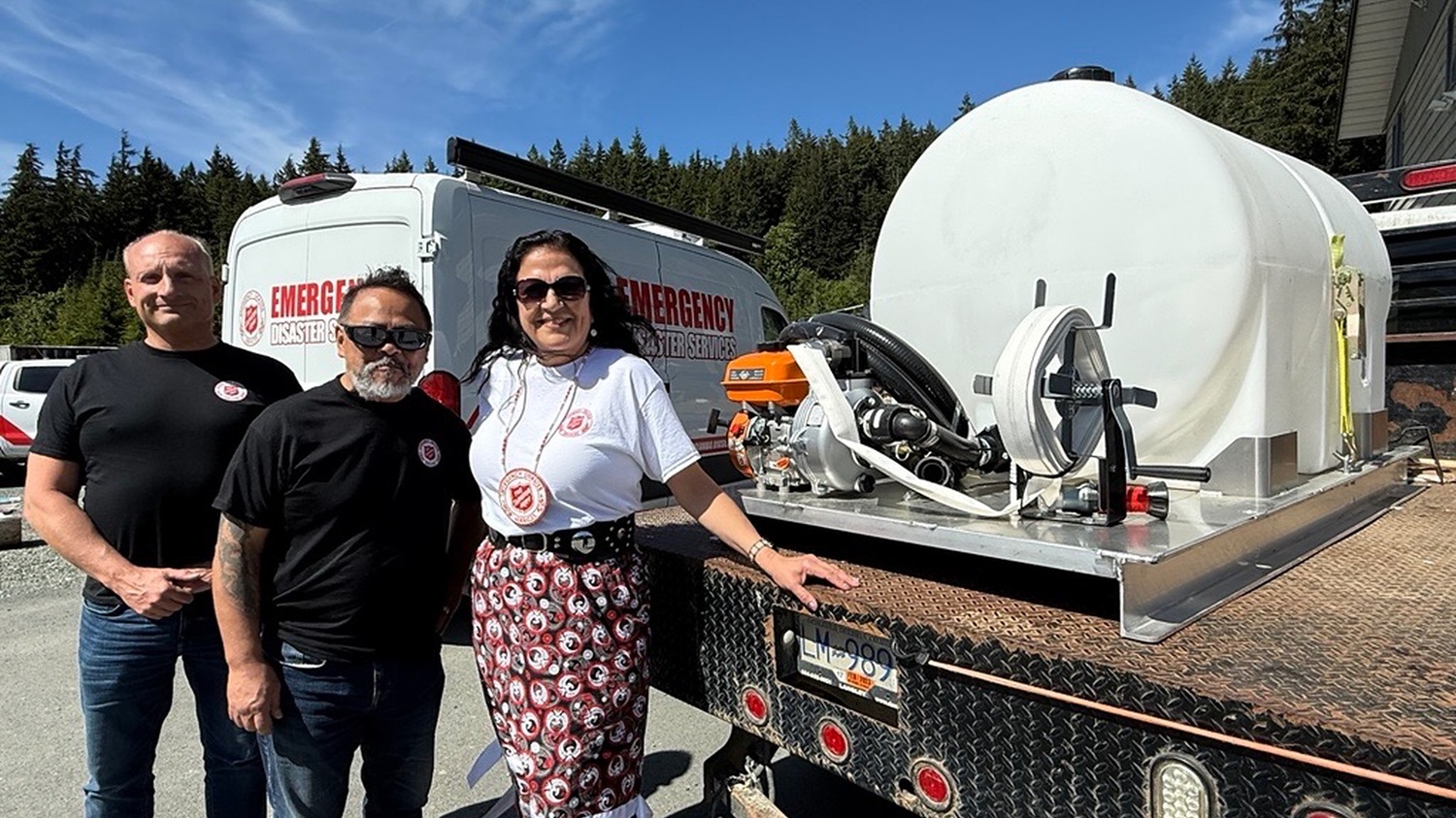
In B.C., EDS delivered fire skids to First Nations across the province. The equipment helps those in remote areas temporarily control potential wildfires.
In Kenora, Ont., the local Salvation Army received an EDS response vehicle to assist with emergencies in the nearby Grand Council Treaty 3 region.
After flooding forced the Red Earth and Shoal Lake Cree Nations in Saskatchewan to evacuate, The Salvation Army delivered food hampers to both communities when members returned home.
“Those who received support from The Salvation Army were very grateful. We also offered emergency response training as a way to enhance our partnerships,” Tracy adds.
In Toronto and Kahnawake, Que., The Salvation Army was invited to take part in powwows. At both events, EDS trucks served refreshments to attendees.
Taking part in these celebrations gave Salvation Army staff an opportunity to learn more about Indigenous culture while connecting with community members. EDS teams also shared information on the organization’s emergency response initiatives, its work raising awareness of Modern Slavery and Human Trafficking (MSHT) and volunteer opportunities.
For Tracy, who is from the Piapot First Nation in Saskatchewan, it is an honour to be in a position that allows her to connect The Salvation Army with Indigenous communities. She sees the work as a step forward in Truth and Reconciliation.
“I have also been able to sit down with Indigenous leaders and Elders to explain all the different ways in which The Salvation Army assists people across Canada.”
“In my role, I am able to educate Salvation Army staff on cultural aspects of First Nations,” she says. “I have also been able to sit down with Indigenous leaders and Elders to explain all the different ways in which The Salvation Army assists people across Canada. I think this has increased trust in the organization.”
As The Salvation Army continues to collaborate with First Nations communities, Tracy believes listening, learning and sharing knowledge will remain important in strengthening these relationships.
By Juan Romero
