
Nearly Six in Ten Saskatchewan and Manitoba Residents Using Savings to Cover Basic Needs, Salvation Army Report Finds
New research reveals growing financial pressures across the Prairies, with households relying on savings and credit as concerns about U.S. tariffs rise
REGINA/ WINNIPEG, Nov. 3, 2026 – Nearly six in 10 Saskatchewan and Manitoba residents are using savings to cover basic needs, according to new research from The Salvation Army, highlighting the financial pressures facing households across the Prairies.
The Salvation Army’s 2026 Canadian Poverty and Socioeconomic Analysis reveals that 59% of Saskatchewan and Manitoba residents report using savings to afford basic necessities, compared with 50% nationally. At the same time, 41% report taking on debt or using credit, while 34% have delayed or missed bill payments because they didn’t have enough money.
The report also finds that concerns about U.S. tariffs are rising across the region, with 27% identifying tariffs as one of Canada’s top three concerns, up 10 percentage points from 2025.
The Salvation Army surveyed more than 1,500 Canadians to better understand their attitudes, behaviours and experiences related to poverty, food and housing affordability, financial security and other socioeconomic challenges. As Canada’s largest non-governmental direct provider of social services, the organization uses this research to better understand evolving community needs and inform the support it provides.
“Nearly six in 10 people across Saskatchewan and Manitoba say they’re using savings just to cover basic necessities,” says Bernadette DeSantis, divisional secretary for public relations, Prairies and Northern Territories Division. “When families are drawing on money they’ve worked hard to put aside simply to afford groceries, housing and other essentials, it becomes much harder to prepare for unexpected expenses or setbacks.
At The Salvation Army, we see how financial pressure can affect every part of a person’s life. Through food assistance, shelter services and practical support, we’re helping individuals and families navigate difficult times with dignity and hope. These findings reinforce the importance of having a strong community safety net so people know they have somewhere to turn when they need help.”
Financial Pressures Continue as Households Draw on Savings and Credit
The report reveals that financial strain remains widespread across Saskatchewan and Manitoba, with many residents relying on savings and credit to manage everyday expenses.
The research finds:
- 59% report challenges managing limited financial resources, up from 51% in 2025.
- 59% report using savings to afford basic needs, compared with 50% nationally.
- 41% report taking on debt or using credit to cover basic expenses.
- 34% report delaying or missing bill payments because they don’t have enough money.
- More than half (55%) aren’t confident they could find another suitable, affordable home in their community if they had to move.
Despite these pressures, 46% of Saskatchewan and Manitoba residents say they are optimistic about their financial future over the next two years, up slightly from 44% in 2025.
“For many households, the cost of living isn’t just about cutting back on extras anymore,” says DeSantis. “It’s about making difficult choices between groceries, housing and other basic necessities. When people are using savings or taking on debt just to get by, it leaves very little room for unexpected challenges. That’s why The Salvation Army continues to provide practical assistance to help people through difficult periods.”
Trade Tensions Add to Household Financial Pressures
Economic uncertainty is also weighing on Prairie households, with concerns about U.S. tariffs increasing over the past year.
The report finds:
- 27% of Saskatchewan and Manitoba residents identify U.S. tariffs as one of Canada’s top three concerns, up 10 percentage points from 2025.
- More than six in 10 (62%) say their household has felt a financial impact from U.S. tariffs or trade disputes.
- 88% are concerned that proposed U.S. tariffs will increase prices for everyday goods.
- 84% agree that organizations providing social supports and community services play an important role in helping families navigate the economic impacts of global trade.
The findings highlight how Prairie residents perceive international trade uncertainty as another source of financial pressure at a time when many households are already struggling with everyday affordability.
“Trade policies may seem like distant economic issues, but for families trying to make ends meet, the concern is much closer to home,” says DeSantis. “When people are already struggling to afford basic necessities, the possibility of higher prices creates additional uncertainty. The Salvation Army remains focused on providing food, shelter and practical support to help people facing financial hardship, regardless of the broader economic circumstances.”
Food Affordability Remains a Concern Across the Prairies
Food affordability is also a significant concern among Saskatchewan and Manitoba residents, with 36% identifying it as one of Canada’s top three issues, up 10 percentage points from 2025.
The report also finds:
- Nearly one in three residents (32%) report skipping or reducing meals because they couldn’t afford groceries.
- One in 10 (10%) accessed community food supports in 2026.
- Half (50%) report experiencing food-related challenges, up slightly from 49% in 2025.
These findings highlight how financial pressures are affecting households’ ability to meet everyday needs.
“No one should have to worry about whether they can afford enough food while also keeping a roof over their heads,” says DeSantis. “Through food banks, community meals and other practical assistance, The Salvation Army helps individuals and families access essential resources and find support during difficult times.”
Community Support Remains Essential
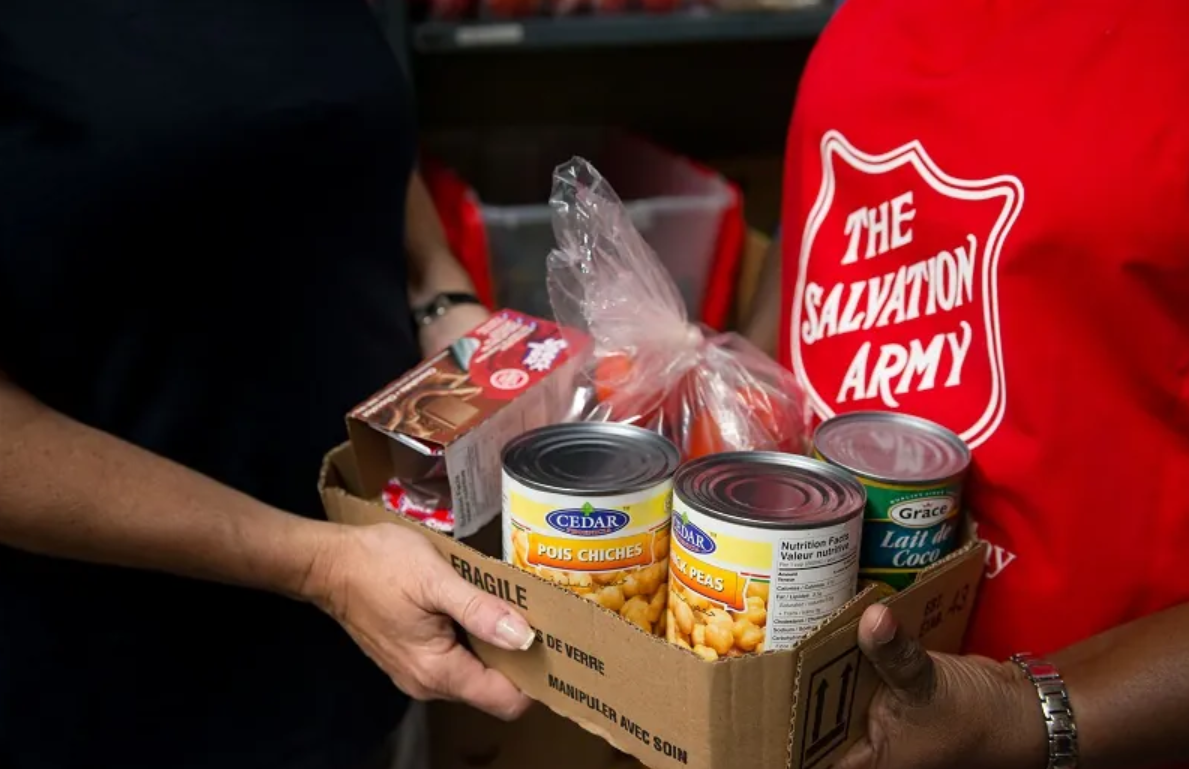
The Salvation Army continues to provide food, shelter and practical assistance to individuals and families facing hardship across Saskatchewan and Manitoba.
Nationally, the 2026 report finds that 83% of surveyed support-service users say accessing services improved their family’s wellbeing, compared with 80% in 2025. However, the proportion of Canadians reporting monetary charitable donations declined from 79% to 75% over the same period.
“People across Saskatchewan and Manitoba have a strong tradition of helping their neighbours, and that generosity makes a real difference,” says DeSantis. “Even when households are facing financial pressures of their own, community support remains essential. Every donation and every volunteer hour helps The Salvation Army continue providing food, shelter and hope to people who need it most.”
This holiday season, residents of Saskatchewan and Manitoba can help The Salvation Army continue supporting vulnerable individuals and families in their communities.
Give hope this holiday season. Your donation helps The Salvation Army provide food, shelter and practical assistance to people facing difficult circumstances.
To learn more or support The Salvation Army’s work in communities across Saskatchewan and Manitoba, visit www.salvationarmy.ca.

About the Report
The Canadian Poverty and Socioeconomic Analysis is an annual national survey commissioned by The Salvation Army to better understand the financial, social and structural challenges Canadians are facing.
The 2026 study was conducted by Edelman Intelligence from September 11 to 18, 2026, among a nationally representative sample of 1,525 Canadians who are members of the online Angus Reid Forum, balanced and weighted by age, gender and region. Saskatchewan and Manitoba-specific findings are based on a combined regional sample of 108 respondents.
Residents of Yukon, Northwest Territories and Nunavut were not included in the survey.
A margin of error cannot be calculated for a non-probability sample. For comparison purposes only, a probability sample of 1,525 respondents would carry a margin of error of approximately ±2.5 percentage points, 19 times out of 20.
About The Salvation Army
The Salvation Army is an international Christian organization that began its work in Canada in 1882. In Bermuda, the Army has been at work since 1896. Today, it is the largest non-governmental direct provider of social services in the country, offering hope and support to vulnerable people in 400 communities across Canada and Bermuda and in more than 130 countries around the world.
We believe in the transformative power of a helping hand—empowering people to move forward, no matter where they’re starting from. With open doors, open minds, and open hearts, The Salvation Army provides practical, personalized support to those facing poverty, homelessness, addiction, food insecurity, and other complex challenges.
Our services include hunger relief through food banks and meal programs; shelter and housing support; addiction rehabilitation; long-term and palliative care; and life-skills development such as budgeting and cooking. We also offer children and youth programming, including after-school activities, camps, school nutrition, and Christmas assistance such as food hampers and toys.
Supported by generous donors, volunteers, and community partners, The Salvation Army meets people in their moment of need—and stays with them for the journey ahead. When you give to The Salvation Army, you’re investing in renewed hope, restored dignity, and a stronger future for overlooked individuals and families in your community.
News releases, articles and updated information can be found at www.salvationarmy.ca.
SOURCE: The Salvation Army
For Media Inquiries
Bernadette DeSantis
Divisional Secretary for Public Relations
Prairies and Northern Territories Division
The Salvation Army
(780) 220-6007
[email protected]