
10th anniversary: Fort McMurray fires
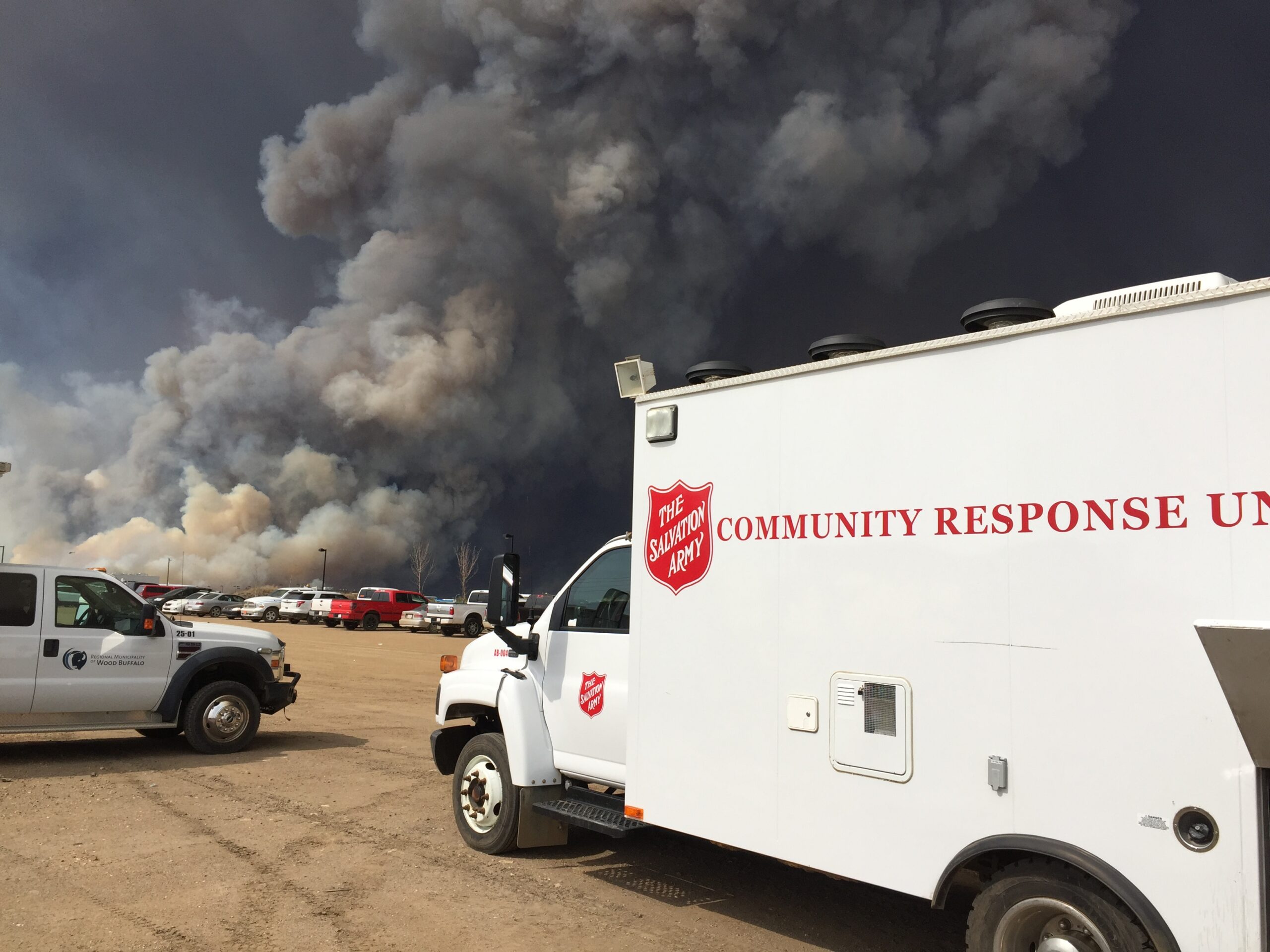
When Fort McMurray was ravaged by a wildfire that became one of the largest and most costly natural disasters in Canadian history in 2016, The Salvation Army’s Emergency Disaster Services (EDS) team had boots on the ground, ready and willing to assist first responders and evacuees.
Over 88,000 people were displaced, 2,500 homes and buildings were destroyed, and EDS was there every step of the way, helping with evacuations, feeding and supporting first responders, and serving returning evacuees.
“It was like an atomic bomb had gone off,” said Major Bond Jennings, looking back on the fire’s devastation of the city. Major Bond and his wife Marina were associate corps officer in Fort McMurray during the emergency.
The evacuation
The City of Fort McMurray announced an evacuation on May 3, and the Government of Alberta declared a provincial state of emergency on May 4. The rapidly growing fire had jumped rivers and highways, creating bumper-to-bumper traffic while residents fled south to cities such as Edmonton, Calgary and Red Deer, or north to oil field camps.
“[Evacuees] were escorted by the RCMP and a water truck that was pouring water on the pavement to keep the pavement cool, so your tires wouldn’t explode as you’re driving through. It was like a war zone,” said Major Steve Hibbs, who, along with his wife Elaine were corps officers in Fort McMurray in 2016.
At the time, The Salvation Army in Fort McMurray was running a corps ministry (church), residential and community support services for adults with developmental disabilities called the START program, two shelters, and a thrift store.
There was no formal emergency mandate for the event of a city-wide evacuation, and the only evacuation plan The Salvation Army had, was to relocate to another building in the city. The officers in Fort McMurray were left to come up with solutions that would ensure the safety of every employee and client under their care.
Several Alberta communities graciously offered facilities and residences to clients in need of shelter. A dedicated response team was set up at the divisional headquarters in Edmonton to coordinate efforts and work closely with community partners and other agencies to ensure support for residents forced to flee. Communication between The Salvation Army officers stayed consistent, and staff worked together to ensure everyone got out safely.
“I will pat our staff on the back,” said Major Steve Hibbs. “Every effort was made to reach out to everybody that we were responsible for and beyond.”
EDS support through the fires
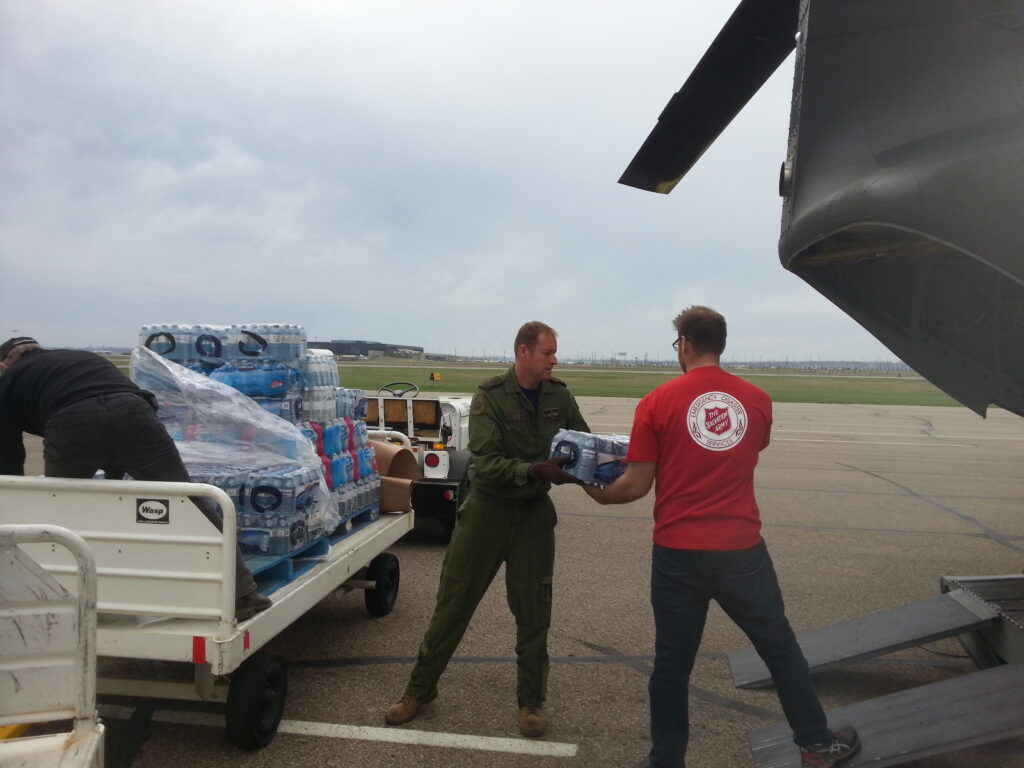
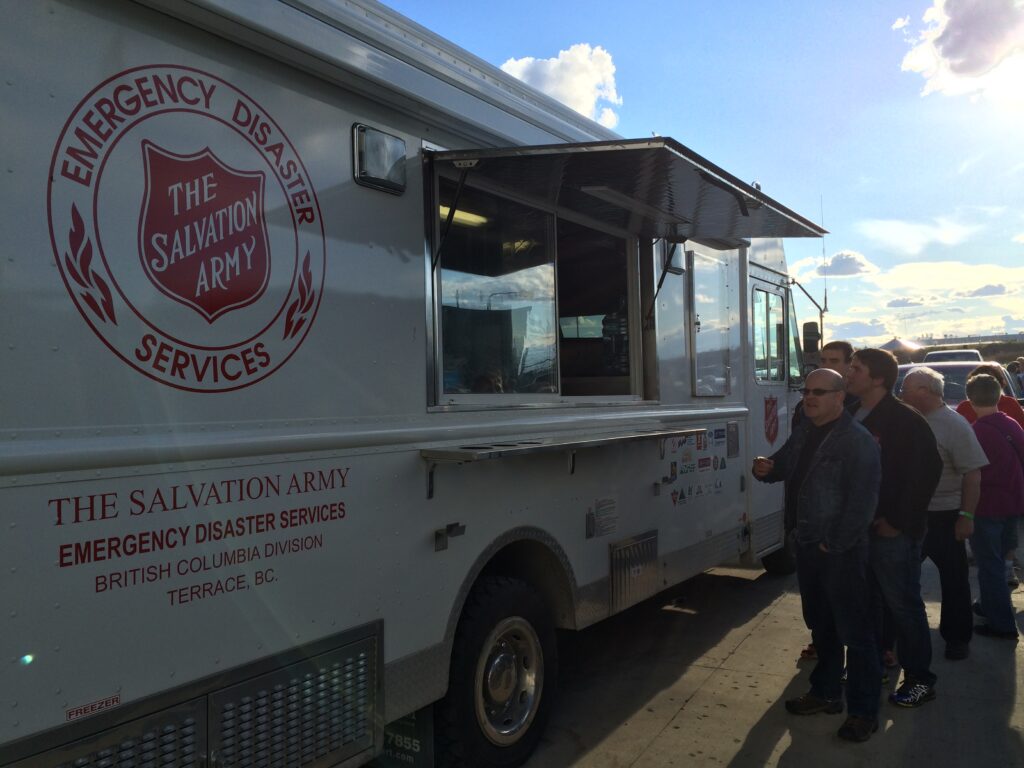
While the city was left empty, and emergency first responders continued to fight the fires, the Salvation Army’s EDS team stayed behind to provide meals and emotional and spiritual care.
Captain Ian Scott was called to support EDS on the second response team arriving in Fort McMurray almost 10 days later. He recalls the eerie feeling of the city.
“You were in the middle of a city, and yet, there was no city noise, no sense of urgency or folks going about their day,” said Captain Scott.
EDS set up two canteens in the fire hall parking lot to provide lunches, snacks, water, and emotional support. The Salvation Army staff and volunteers worked 10-12 hours and slept on cots at the college across the street.
The EDS team worked with several agencies to coordinate logistics and ensure any issues were resolved as fast as possible. Reports were sent to divisional headquarters, which worked alongside territorial headquarters to ensure that operations and safety were all in order.

The return of residents
On June 1, 2016, residents of Fort McMurray were finally given the go-ahead for re-entry. The Salvation Army’s EDS team was set up at various reception sites around the city, so when people returned home, they could get information and the supports they needed.
“When I first got back in Fort McMurray and was driving through town… it was just like driving through a war-torn country,” said Verna Thomas-Winsor, an employee of The Salvation Army church in Fort McMurray.
More than 200 Army employees and volunteers took part in the EDS work during evacuation and re-entry. During the re-entry, the corps was transformed into a reception centre for residents returning from evacuation, and The Salvation Army assisted thousands of people by providing practical help, such as food and household items, as well as emotional and spiritual care.
Ten years later
Many people did not return to Fort McMurray after the fires. The wildfire was declared officially out on August 2, 2017. The fire destroyed 15 per cent of the city’s buildings and set a record as the most expensive natural disaster in Canadian history.
Looking back, The Salvation Army’s response was made possible by every volunteer who gave their time and energy to help first responders and evacuees. The days were long, and the effort of everyone who came together to help a community rise from the ashes was a testament to the strength of the human spirit.
