
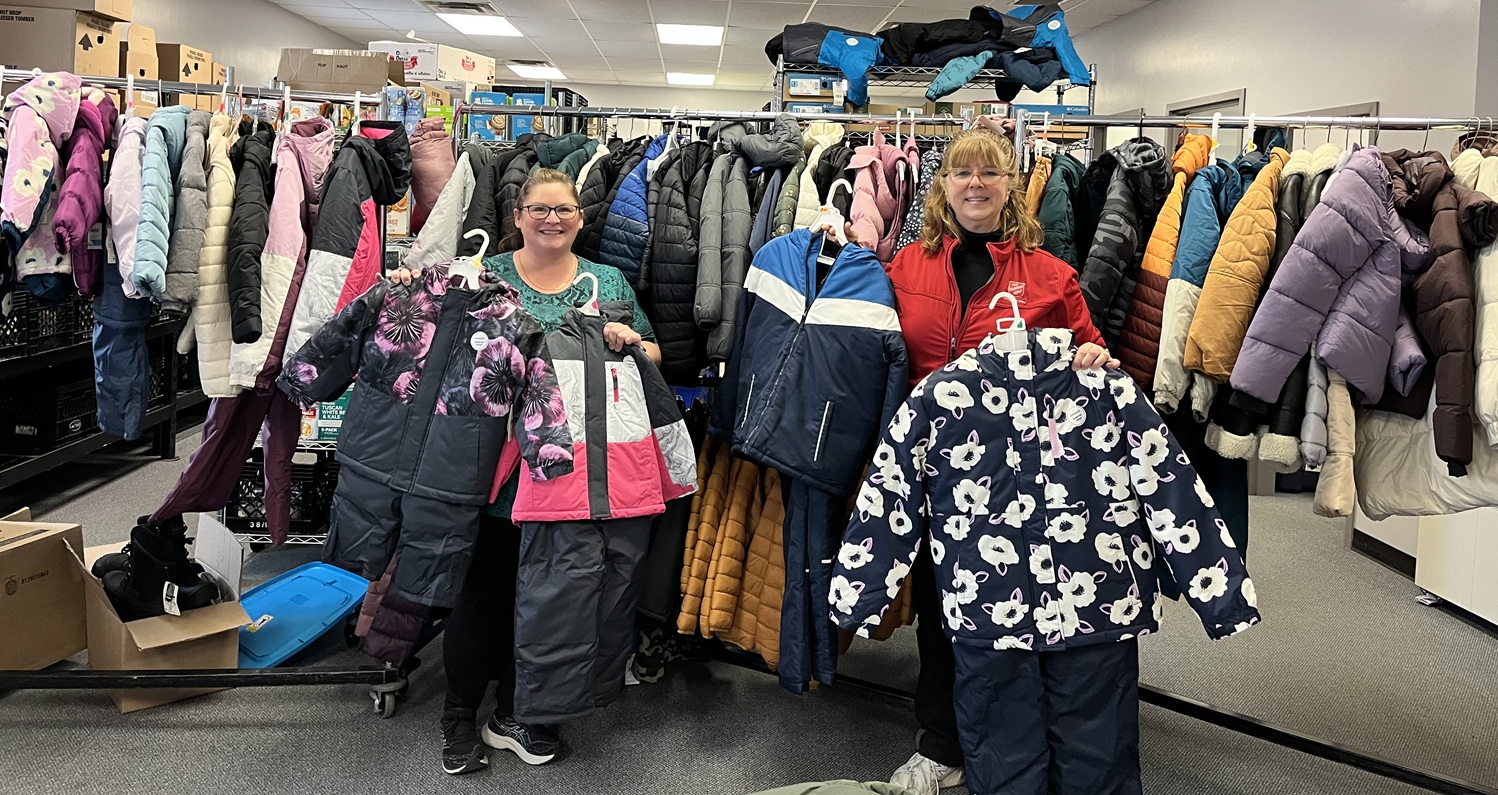
Salvation Army Snowsuit Drive Keeps Children Warm
With winter well underway, The Salvation Army in Napanee, Ont., stepped up early this year to ensure children had appropriate cold-weather attire.
For the third consecutive year, The Salvation Army ran a month-long snowsuit drive, aiming to help children not only in Napanee but also in surrounding communities. Through this program, coats, boots and other essential winter gear were delivered to children from families experiencing financial hardship.
To identify those most in need of winter clothing, the Army worked closely with local schools.
“If kids don’t have appropriate winter wear to go to school, they are more likely to miss class.”
“We have a partnership with the schools and they assist us with registration. Teachers are the ones who see which students come with or without appropriate winter wear,” Abigail Mills, director of community ministries, explains.
Due to the rising cost of living, donations declined in recent years. However, despite financial struggles, the community still came out to support the initiative and The Salvation Army ensured its goal was met.
“More families are finding it harder to make ends meet and as a result, kids sometimes don’t get the outerwear they need.”
“We knew we had to deliver, because if kids don’t have appropriate winter wear to go to school, they are more likely to miss class,” Abigail adds.
Thanks to this year’s snowsuit drive, more than 200 students received donations of winter clothing. For struggling families, this assistance was both crucial and meaningful.
“More families are finding it harder to make ends meet and as a result, kids sometimes don’t get the outerwear they need,” Abigail says. “Many of the parents we helped were relieved to know we are here for them.”
In Napanee, The Salvation Army’s support stretches beyond winter. The organization assists the community through food bank services, Christmas assistance and with referrals to benefit applications.
“We are truly grateful to be able to assist families that live in our neighbourhoods,” Abigail adds.
By Juan Romero
